
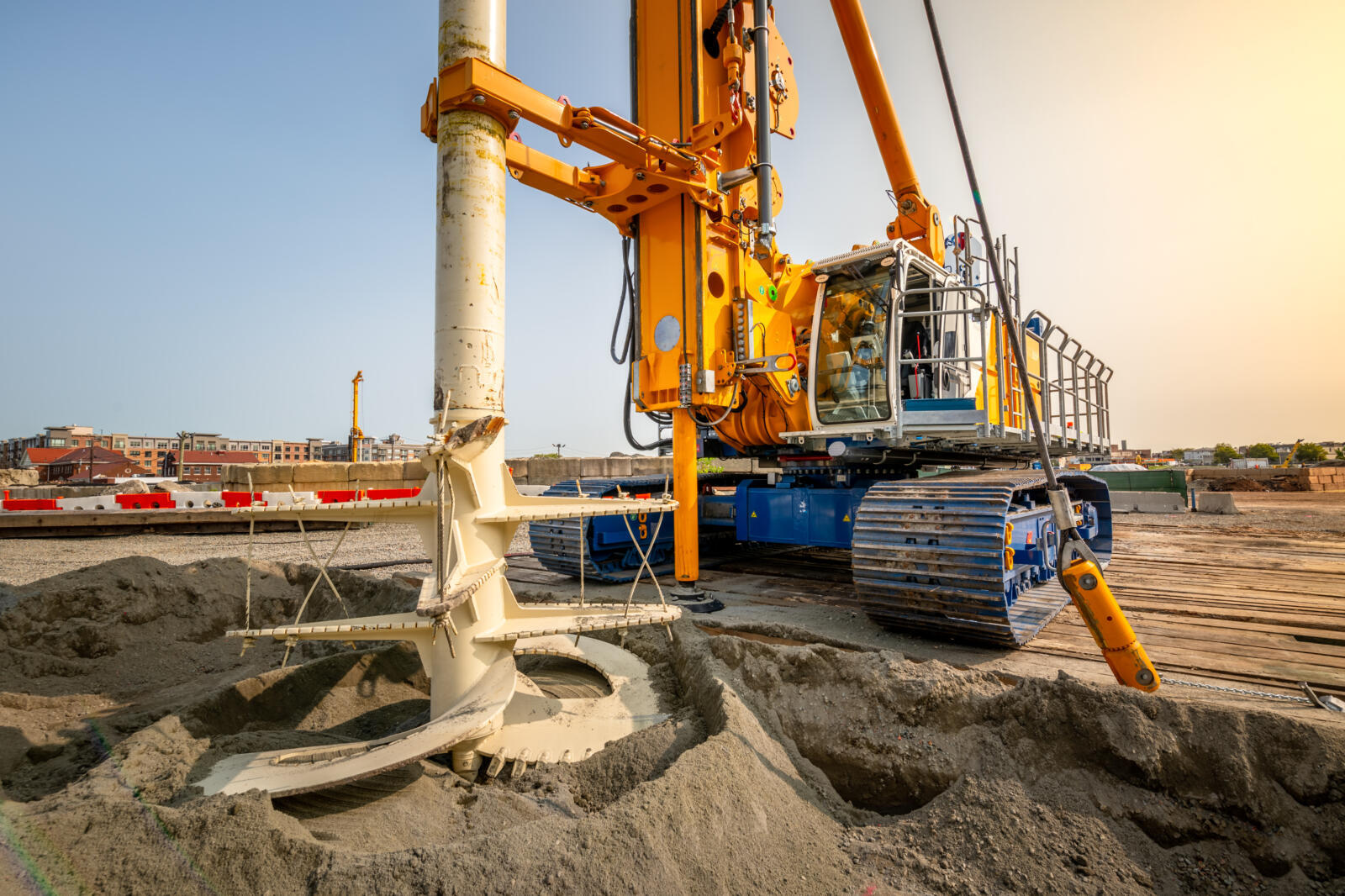
BAUER drilling rigs are engineered for real-world applications. In this blog series, we break down some of the most widely used BAUER foundation methods in North America, explaining where each application delivers the most value and why BAUER equipment consistently outperforms alternatives. Insights throughout the series are informed by Gordian Ulrich, ECA Vice President of Bauer Product Sales & Service, whose experience spans decades of real-world foundation construction across challenging ground conditions.
Soil Mixing: Improving Ground, Not Just Supporting Loads
Soil Mixing applications shift the focus from supporting structural loads to improving ground conditions. It is used when uniform strength, stability, or groundwater control is required rather than deep load transfer.
BAUER offers multiple Soil Mixing Applications, the most common ones in North America are:
- Single Column Soil Mixing (SCM) - Diameters up to 12’
- Single Column Soil Mixing Double Head (SCM-DH) - Works great in hard soils and even in clay
- Cutter Soil Mixing (CSM) - Allows cutting depths of up to 173’
- Multi Shaft Soil Mixing (MSM) - Up to 4 mixing heads, designed for RTG rigs
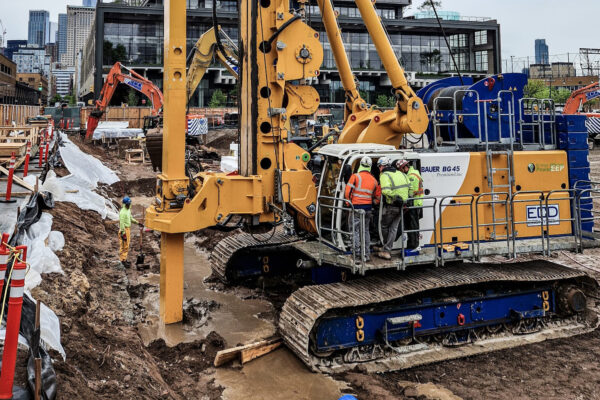
When Soil Mixing makes Sense:
Soil Mixing is commonly selected to:
- Improve weak or variable soils
- Increase overall ground strength
- Create low-permeability barriers to control groundwater
Soil mixing applications are ideal for excavation support, environmental containment, slope stabilization, cut off walls and ground improvement applications where traditional piling is not required.
The Basics of Soil Mixing
Any soil mixing application combines locally existing soil with cement and water to create a cemented soil mass. In North America we use the so called wet soil mixing method which means we batch the cement slurry with water first and then pump the wet mix through the tool into the ground. There are also dry soil mixing methods out there, mostly used in the Scandinavian countries, where dry cement powder is injected into the soils and the moisture of the ground then starts the hardening process of the cement.
Understanding Limitations
One reason why BAUER offers multiple soil mix applications is to be able to do soil mixing in a wide range of different ground conditions. Generally speaking, granular soils are easier to soil mix, clays can present a challenge and need to be addressed with the correct tool and procedure, and obstructions or rock should be avoided for any of the tools. Upfront engineering assessment is critical to ensure performance expectations are met.
Soil Mix the BAUER Way
“The beauty with BAUER is they have a solution (meaning application) for almost all soil mix challenges out there,” Ulrich said “And if not they have engineers who will be looking to find a solution for us.”
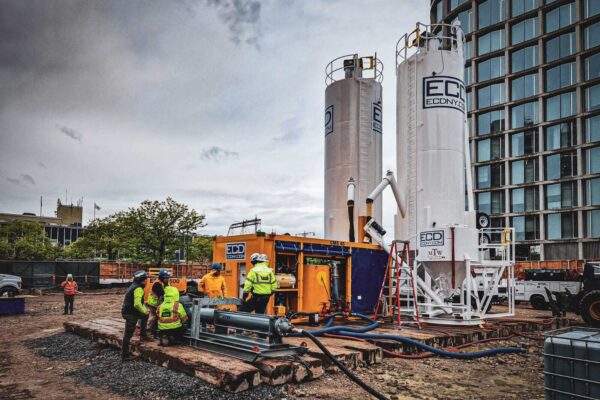
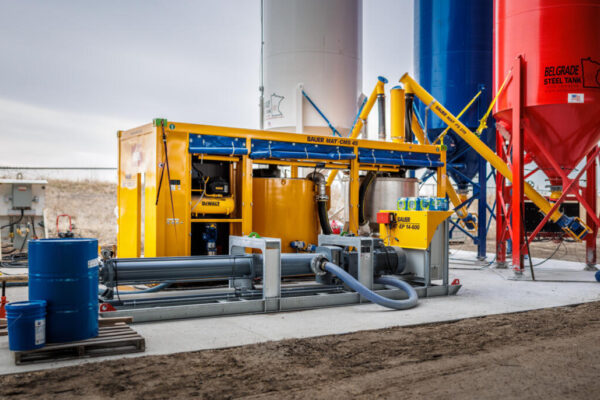
In addition to that you can get the whole package including the CMS 50 automated batch mixers and mono pumps from ECA along with the rig, tooling and flowmeter setup. BAUER and RTG rigs paired with MAT equipment is a turnkey solution that gives our customers the edge to react quickly and show up with the most productive equipment solution out there.
Topics:
More Articles in Bauer
Choosing a Grout Pump for CFA and Full Displacement Piles
Learn how to size a grout pump for CFA and full displacement piles, from grout volume and overbreak to rig…
Managing Drilling Slurry: How Separation Systems Improve Foundation Jobsites
Learn how drilling slurry separation and desanding systems remove solids, recover fluids and improve material handling in foundation drilling and…
Foundation Grout and Slurry Mixing: MAT Equipment Explained
Learn how MAT mixing and pumping equipment supports foundation drilling, soil mixing and micropile applications with automated batching and colloidal…